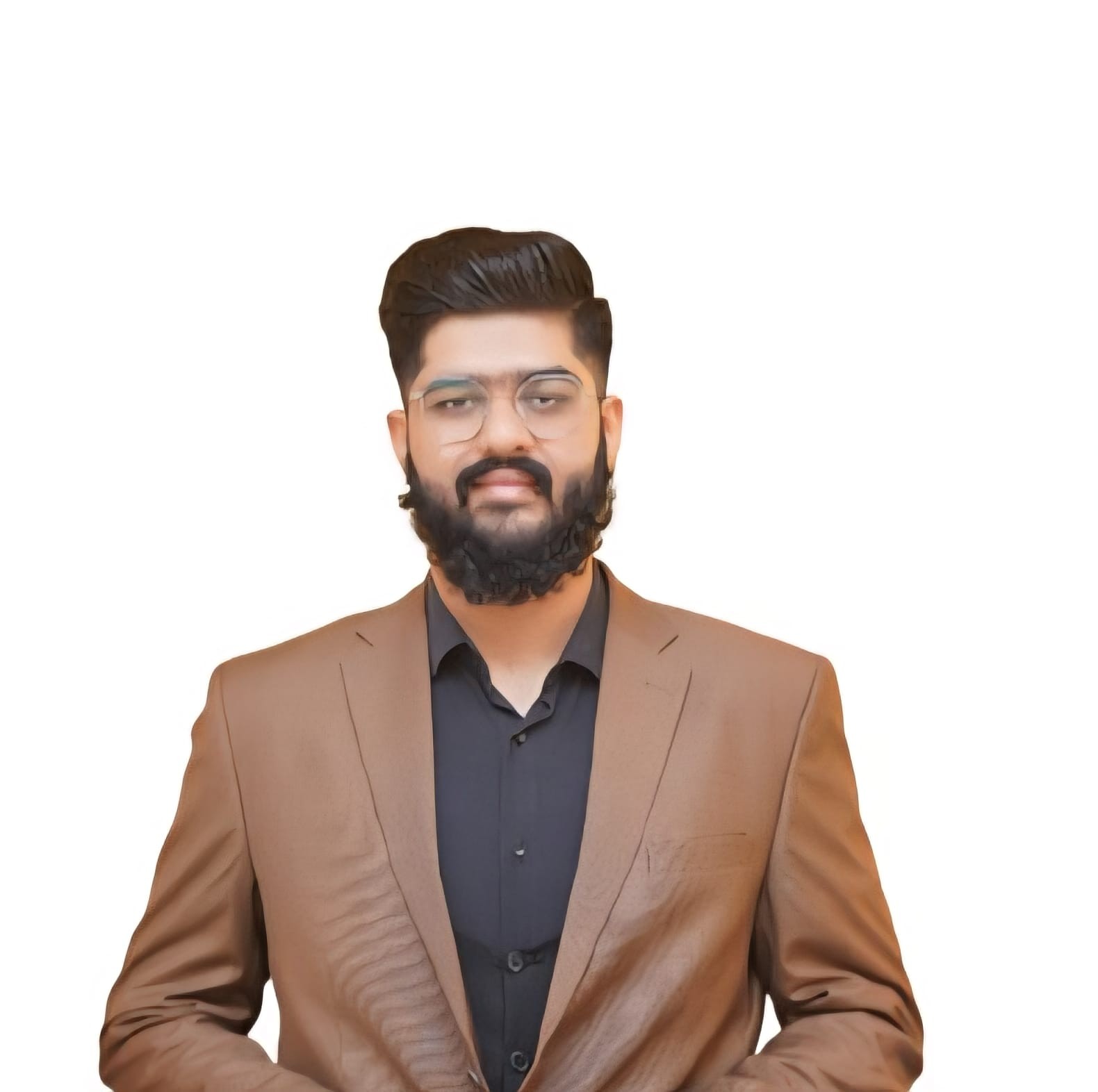
Biography
Muhammad Sameet Ismat is a Material Science and Engineering graduate (Class of 2023) from the Institute of Space Technology (IST), Islamabad. He currently serves as a Research Assistant at Bioengineering Research & Development (Private) Limited. having joined the organization initially as a Trainee Engineer in June 2023.
In his role as a Research Assistant, Sameet has developed extensive proficiency in fabrication techniques such as Direct Ink Writing (3D printing) and Electrospinning. He is an active contributor to the scientific community, with multiple peer-reviewed publications in high-impact journals detailing his work on therapeutic scaffolds and hydrogels. His academic background is complemented by his hands-on experience in both physicochemical analysis and biological assays.
Research Interests
My focus lies at the forefront of Biomedical Engineering and Material Science, specifically in the domain of Tissue Engineering. I am dedicated to the development and characterization of advanced biomaterials, including hydrogels, 3D printed scaffolds, and nanofibers. My work primarily aims to address challenges in wound repair, burn care, and drug delivery systems by utilizing novel biopolymer composites (such as alginate, chitosan, and guar gum) and reinforcing them with bioactive agents like mesoporous bioactive glass nanoparticles (MBGNs). I am particularly interested in the intersection of biological characterization and material fabrication to create biomimetic solutions that enhance cell proliferation and tissue regeneration.
Areas of Expertise
• Fabrication Techniques: 3D Printing (FDM, Bio-Ink), Electrospinning, Hydrogel formulation.
• Analytical Techniques: FTIR Spectroscopy, UV-Visible Spectroscopy, TGA (Thermogravimetric Analysis).
• Bio-Characterization: Antibacterial Studies, CAM Assay, Cell Culture, Drug Release Kinetics.
• Software Proficiency: Origin Pro, Image J, 3D Design Software.
Member Details
Education
Bachelor of Material Science and Engineering
Institute of Space Technology (IST), Islamabad
(09/2019 – 07/2023)
Responsibilities
• R&D Execution: Conducting research, development, and characterization in the fields of Hydrogels, 3D Scaffolds, Nanofibers, Particle Synthesis, and Coatings specifically for tissue engineering applications.
• Material Characterization: Performing comprehensive materials science analysis (e.g., FTIR, UV-Visible Spectroscopy) to validate the structural and chemical integrity of developed biomaterials.
• Biological Assessment: Executing biological characterizations (e.g., antibacterial studies, cell culture) required for researching the efficacy of medical products.
• Product Research: Assisting in the research and marketing analysis of developed biomedical products to ensure alignment with clinical needs.
Current Projects
Mineral-Reinforced Scaffolds: Currently conducting research on 3D-Printed Scaffolds reinforced with Natural Minerals (Asphaltum Punjabianum) for skin tissue engineering applications.
Publications
Propolis enhanced sodium alginate hydrogel enriched with copper doped mesoporous bioactive glass nanoparticles for advanced burn care applications
Chronic wounds, with prolonged healing time, remain a formidable challenge due to lack of angiogenesis, antimicrobial effect, and biocompatibility of conventional wound dressings. The current study focuses on developing novel copper-doped mesoporous ...
Oxidized agarose-based 3D printed scaffold reinforced with Ag-MBGNs, a detailed study on fabrication and in-vitro investigations
Additive manufacturing offers a cutting-edge technique for producing customized implants tailored to individual patients. In this study, novel three-dimensional (3D) scaffold was fabricated from oxidized agarose reinforced with polyethylene glycol by ...
Development of therapeutic ions loaded oxidized guar gum and sodium alginate-based 3D printed biomimetic scaffolds investigated in-vitro and in-vivo for burn wound repair
A novel, potentially effective, and precise 3D-printed scaffold was fabricated for presumable burn injuries. A natural polysaccharide guar gum (GG) was chemically modified (oxidized) to guar gum dialdehyde (OGG) to enhance its reactivity towards the ...
Direct ink write 3D printed poly (ethylene oxide)/ Guar gum/ lawsone scaffolds for burn care applications
Burn is one of the leading causes of trauma worldwide, with significantly higher mortality rates in third-world countries. Therefore, there is an urgent need to provide dynamic solutions to treat burns, particularly for third-degree burn patients. Th ...
Re In-vitro evaluation of tragacanth gum based 3D scaffold enriched with lawsone: A potential approach for wound repair
In the realm of soft tissue engineering and wound dressings, biomaterials-based three-dimensional (3D) biocompatible scaffolds emerged as a promising candidate. Herein, a novel combination of tragacanth gum (TG) combined with polyvinylpyrrolidone (PV ...
Fabrication and in vitro insights of polyethylene oxide/locust bean gum enriched with ethanolic extract ginger-based 3D printed scaffold
Herein, this study unveils a novel ink blend merging polyethylene oxide (PEO) and locust bean gum (LBG) enriched with ethanolic extract of ginger (GR), revolutionizing the development of an essential network of 3D scaffold. The ink blend was diligent ...
Development and characterization of polyethylene oxide and guar gum-based hydrogel; a detailed in-vitro analysis of degradation and drug release kinetics
Herein, we synthesized hydrogel films from crosslinked polyethylene oxide (PEO) and guar gum (GG) which can offer hydrophilicity, antibacterial efficacy, and neovascularization. This study focuses on synthesis and material/biological characterization ...
Development of hybrid polyvinylpyrrolidone/carboxymethyl cellulose/collagen incorporated oregano scaffolds via direct ink write printing for potential wound healing applications
Additive manufacturing can develop regenerative scaffolds for wound healing. 3D printing offers meticulous porosity, mechanical integrity, cell adhesion and cost-effectiveness. Herein, we prepared ink composed of carboxymethyl cellulose (CMC), polyvi ...
Advancing cartilage Repair: A Biomimetic approach with oxidized guar gum, chitosan, polyether ether ketone-based injectable hydrogel
Herein, we developed hydrogel (potentially injectable) composed of oxidized guar gum, chitosan, and polyether ether ketone to provide cartilage support and regeneration. Scanning electron microscopy confirmed spongy and microporous structures. The sy ...