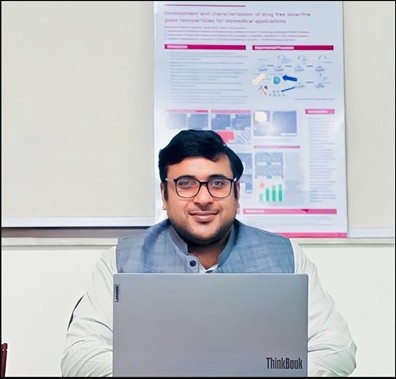
Biography
I am Dr. Ing. Muhammad Atiq Ur Rehman, a researcher, academic, and entrepreneur specializing in biomaterials and tissue engineering. I am currently serving as an Assistant Professor at the Institute of Space Technology, Islamabad, where I lead a dedicated Biomaterials Laboratory. I completed my PhD in Biomaterials and Tissue Engineering from Friedrich-Alexander-Universität Erlangen-Nürnberg, Germany, and have authored over 110 peer-reviewed publications. I have secured major national and international research funding, including grants from the British Council, NIH (USA), World Bank, and HEC Pakistan. Alongside academia, I am also the CEO of Bioengineering Research and Development (Pvt) Ltd., focusing on translating research into real-world biomedical solutions.
Research Interests
My research interests focus on biomaterials, tissue engineering, and protein engineering for biomedical applications. I work on orthopedic and dental biomaterials, soft tissue engineering, wound healing, magnetic drug therapy, and targeted drug delivery systems. A major part of my research involves developing novel proteins for tissue engineering, including protein-functionalized coatings for implants, protein nanoparticles for drug delivery, and 3D-printed protein-based skin patches. I am particularly interested in electrophoretic deposition of complex proteins and bioactive nanostructured coatings, as well as 3D-printed and electrospun scaffolds incorporating bioactive glass and therapeutic ions to enhance regeneration and antibacterial performance.
Areas of Expertise
My areas of expertise include biomaterials development, protein engineering, tissue engineering, and surface modification technologies. I have strong hands-on experience in electrophoretic deposition, 3D printing, electrospinning, electrospraying, hydrogel synthesis, and bioactive and antibacterial coatings. I am skilled in cell viability assays, antibacterial testing, biomarker analysis, alloy development, and in-vitro/in-vivo biomaterials evaluation. I also possess experience with AutoCAD, MATLAB, LaTeX, and advanced laboratory techniques for translational biomaterials research.
Member Details
Education
I completed my PhD in Biomaterials and Tissue Engineering (2015–2018) from Friedrich-Alexander-Universität Erlangen-Nürnberg, Germany, with a final CGPA of 1.3 (Sehr gut). My doctoral research focused on electrophoretic deposition of bioactive nanostructured composite coatings on metallic substrates. I earned my Master’s degree in Metallurgical and Materials Engineering from UET Lahore, achieving 81%, and my Bachelor’s degree in Metallurgy and Materials Engineering from the University of the Punjab, with a CGPA of 3.8/4.0.
Responsibilities
As CEO of Bioengineering Research and Development (Pvt) Ltd., I am responsible for the commercialization of biomaterials and biomedical products developed at the Biomaterials Lab. My role includes strategic planning, research translation, product development, team leadership, and management of intellectual property. I oversee the scale-up of laboratory technologies into market-ready solutions, particularly in wound care products, tissue engineering scaffolds, protein-functionalized biomaterials, and patient-specific implants. I actively coordinate between academia and industry to ensure sustainable technology transfer and real clinical impact.
Current Projects
I am currently involved in internationally funded translational biomaterials projects. My recent work includes the development of low-cost, patient-specific 3D-printed skin grafts for advanced burn care, successfully validated through animal studies under the World Bank Innovator Seed Fund. I have also led projects on silk-based hydrogels for wound care funded by NIH USA and drug-free bioactive glass nanoparticles funded by the British Council. My ongoing research focuses on electrophoretic deposition-based implant coatings and therapeutic ion-loaded biomimetic scaffolds for regenerative medicine applications.
Publications
Synergistic effect of zirconia and zinc oxide incorporation in polyether ether ketone based coating deposited via electrophoretic deposition for orthopedic implants
A critical issue that contributes to implant failure is poor tribocorrosion resistance of 316L SS implants in the human body. In this study, a novel composite coating of polyether ether ketone (PEEK)–zirconia (ZrO2)–zinc oxide (ZnO) with optimize ...
Correction to “Electrophoretic Deposition, Microstructure, and Selected Properties of Poly(lactic-co-glycolic) Acid-Based Antibacterial Coatings on Mg Substrate”
There is an urgent need to develop biodegradable implants that can degrade once they have fulfilled their function. Commercially pure magnesium (Mg) and its alloys have the potential to surpass traditional orthopedic implants due to their good biocom ...
Biopolymer-based reduced graphene oxide/functionalized CNTs with high separation efficiency: experimental investigation through density functional theory
Herein, we demonstrate a new design approach combining theoretical and practical frameworks in the development of biopolymer (chitosan)-based reduced graphene oxide (rGO) membranes with embedded functionalized carbon nanotubes (CNTs) via polymeric ph ...
Therapeutic Effects of Metallic Ions in the Physiological Environment: A Review on Recent Developments
Recent studies encouraged the regeneration of living tissue, which enhances the quality of life for those who require surgery because of traumatic accidents, bone disorders, bone deformities, or reconstructions. Bio ceramics (BCs) including bioactive ...
Propolis enhanced sodium alginate hydrogel enriched with copper doped mesoporous bioactive glass nanoparticles for advanced burn care applications
Chronic wounds, with prolonged healing time, remain a formidable challenge due to lack of angiogenesis, antimicrobial effect, and biocompatibility of conventional wound dressings. The current study focuses on developing novel copper-doped mesoporous ...
Oxidized agarose-based 3D printed scaffold reinforced with Ag-MBGNs, a detailed study on fabrication and in-vitro investigations
Additive manufacturing offers a cutting-edge technique for producing customized implants tailored to individual patients. In this study, novel three-dimensional (3D) scaffold was fabricated from oxidized agarose reinforced with polyethylene glycol by ...
3D-printed PEEK/Na-alginate scaffolds coated with Ag-Sr doped hydroxyapatite for dental tissue engineering: A detailed in vitro analysis
Objectives The aim of this study was to develop a novel dental bone implant that could enhance bioactivity and provide strength to native dental bones. Such 3D-printed PEEK/Na-ALG scaffolds coated with bioactive Ag-Sr-HA, via electrospray to achieve ...
Effective adsorbent for the removal of methylene blue using natural serpentine/magnetite nanocomposites: Isotherm and kinetic study
The natural serpentine from Skardu, Pakistan, has been incorporated with magnetite (Fe3O4) to form a nanocomposite using a chemical co-precipitation method for the removal of methylene blue (MB) dye. Various techniques such as Field Emission Scanning ...
Chitosan/mesoporous bioactive glass nanoparticles (MBGNs) composite coating deposited on silk suture: An initial in-vivo study
This is imperative to inhibit suture related postoperative infections, which hinder and delay the healing process. Thus, there is a pressing need to modify the surface of the suture that facilitates the healing process. Herein, we synthesized mesopor ...
Controlled biodegradation of AZ31 alloy by chitosan/Fe-doped bioactive glass composite coating deposited via electrophoretic deposition for orthopaedic implants
The fast degradation rate of implants of AZ 31 alloy in the physiological body fluid is a critical problem for orthopaedic applications. The surface modification of AZ 31 can regulate fast degradation by depositing a biocompatible composite coating. ...
Electrospun polyvinyl alcohol/carboxymethyl cellulose loaded with Asphaltum Punjabianum (Shilajit) nanofibrous mats for potential cartilage regeneration applications
Current developments in tissue engineering methods and conventional implants continue to face challenges in tackling the complex avascular characteristics of articular cartilage, hindering effective repair and tissue regeneration. To overcome these c ...
Development of therapeutic ions loaded oxidized guar gum and sodium alginate-based 3D printed biomimetic scaffolds investigated in-vitro and in-vivo for burn wound repair
A novel, potentially effective, and precise 3D-printed scaffold was fabricated for presumable burn injuries. A natural polysaccharide guar gum (GG) was chemically modified (oxidized) to guar gum dialdehyde (OGG) to enhance its reactivity towards the ...
Synthesis and application of cucumber extract-loaded hydrogels based on oxidized carboxymethyl cellulose and alginate as vitreous replacements
Retinal detachment is a leading cause of blindness worldwide, with current treatments using silicone oil or expanded gases to facilitate reattachment. Polymeric hydrogels are a promising alternative due to their optical clarity, rheological propertie ...
Effect of chitosan based composite coating on silk suture to enhance the wound healing ability: An initial in-vivo study
This is imperative to inhibit suture related postoperative infections, which hinder and delay the healing process. Thus, there is a pressing need to modify the surface of the suture that facilitates the healing process. Herein, we synthesized mesopor ...
Direct ink write 3D printed poly (ethylene oxide)/ Guar gum/ lawsone scaffolds for burn care applications
Burn is one of the leading causes of trauma worldwide, with significantly higher mortality rates in third-world countries. Therefore, there is an urgent need to provide dynamic solutions to treat burns, particularly for third-degree burn patients. Th ...
Natural antibiotic Oregano loaded mesoporous bioactive nanoparticles for bone tissue engineering applications: A detailed in-vitro analysis
Mesoporous bioactive glass nanoparticles (MBGNs) offer a versatile platform for targeted dispensation of bioactive compounds found in natural herbs to enhance their osteogenic properties. Herein, we focused on the synergistic combination of phyto-the ...
Strength–Ductility Synergy in NbTaTiV Refractory High-Entropy Alloy Composites via In-situ Formation of TiC from NbC Addition
Refractory high-entropy alloys (RHEAs) have emerged as promising candidates for high-temperature structural applications due to their exceptional thermal stability and mechanical performance. However, most RHEAs still face an inherent trade-off betwe ...
ZnO Nanoparticles infused PVA-Hyaluronic Acid based Hydrogel: An Alternative solution for Skin Wound
This laboratory study aimed to synthesize and characterize various formulations of polyvinyl alcohol (PVA)-based hydrogels by incorporating 1.0 and 3.0 wt% of hyaluronic acid (HA) and zinc oxide (ZnO) nanoparticles (NPs) for skin wound healing. Six d ...
Surface texturing of poly vinyl alcohol/bioactive glass composite fibrous mats for improved cell viability of fibroblast cells: A potential approach for improved wound healing
Herein, polyvinyl alcohol (PVA)/ bioactive glass (BG) mats were developed using an electrospinning technique and later embossed to modify the surface roughness, wettability, and cell biology. Fabricated mats were characterized by surface topography, ...
Electrophoretic Deposition of Chitosan/Mesoporous Bioactive Glass Nanoparticles/Hexagonal Boron Nitride Composite Coating on AZ31 Mg Alloy for Orthopedic Applications
Magnesium-based biodegradable implants are an excellent choice for biomedical applications including maxilofacial and orthopedic applications due to their elastic modulus which closely matches that of the bone. However, their uncontrolled degradation ...
Analytical Characterization of Medium Molecular Weight Chitosan from Pink Shrimp (Metapenaeus dobsoni) Shells
Seafood is widely consumed across the globe and serves as a vital source of essential nutrients. However, the processing of seafood generates significant amounts of waste, including shells and scales, which hold potential for the production of valuab ...
Re In-vitro evaluation of tragacanth gum based 3D scaffold enriched with lawsone: A potential approach for wound repair
In the realm of soft tissue engineering and wound dressings, biomaterials-based three-dimensional (3D) biocompatible scaffolds emerged as a promising candidate. Herein, a novel combination of tragacanth gum (TG) combined with polyvinylpyrrolidone (PV ...
Cu-Doped Mesoporous Bioactive Glass Nanoparticles Loaded in Xanthan Dialdehyde-Alginate Hydrogel for Improved Bioacompatiability, Angiogenesis, and Antibacterial Activity
Objectives: Burn being a major traumatic issue worldwide impacts millions of lives annually. Herein, a novel xanthan dialdehyde/sodium alginate/copper-doped mesoporous bioactive glass nanoparticle (XDA/Na-ALG/Cu-MBGN) hydrogel is presented in this st ...
Development and characterization of glutaryl thiourea crosslinked novel hydrogel; a detailed analysis of biocompatibility, angiogenesis, and antibacterial potential
In this study, we successfully synthesized four novel chitosan hydrogels by carefully crosslinking them with varying concentrations of glutaryl di-isothiocyanate (GTU). This thoughtful approach not only imparts a subtle yellowish tint to the polymer ...
Facile development of carbon nanotube (CNT)-based flexible thermoelectric materials for energy-harvesting applications
In this study, we investigate the thermoelectric properties of functionalized multi-walled carbon nanotubes (F-MWCNTs) dispersed over a flexible substrate through a facile vacuum filtration route. To improve their interfacial adhesion and dispersion, ...