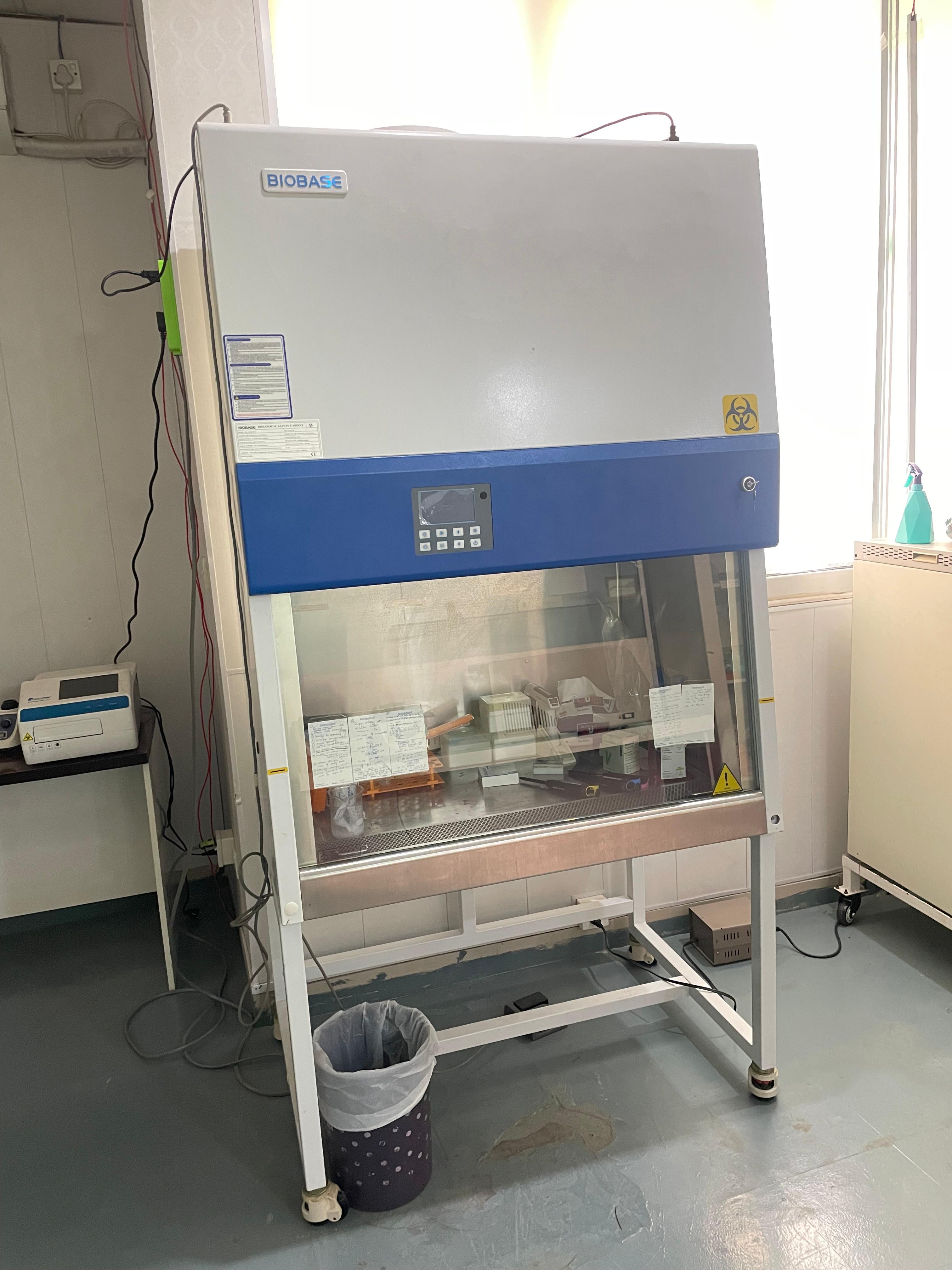
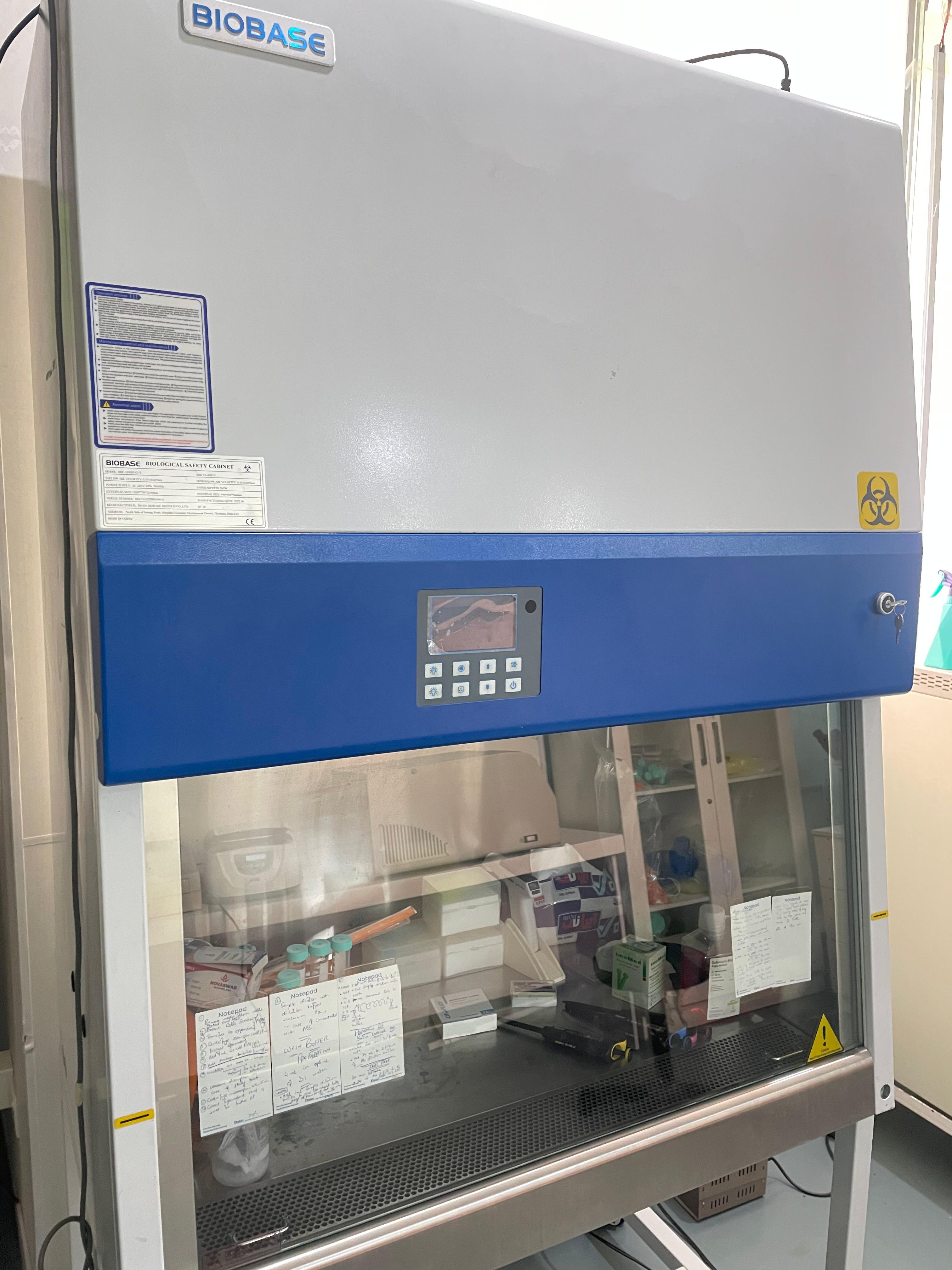
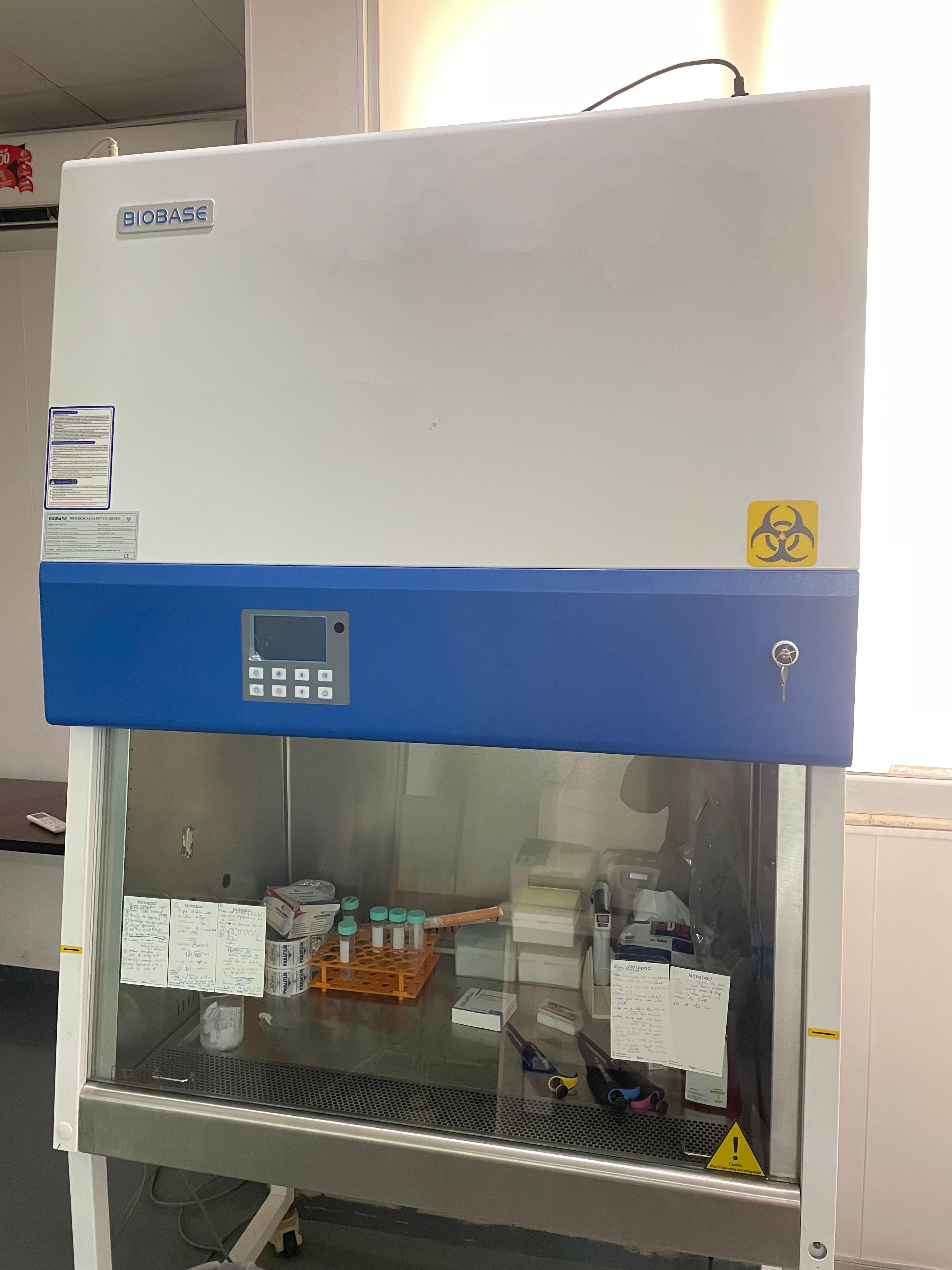
BIOBASE Biological Safety Cabinet
Available for Inquiry
Interested in this equipment?
Send us an inquiry and we'll provide you with all the details.
Description
The BIOBASE BSC-1100IIA2-X is a Class II Type A2 Biological Safety Cabinet designed to provide a safe and sterile work environment for handling biological materials. It uses a controlled airflow and high-efficiency particulate air HEPA filtration system to protect the operator, product, and laboratory environment from airborne contaminants and cross-contamination during microbiological work. The cabinet features a motorized front window, digital display, ergonomic design, and advanced airflow control to support routine laboratory biosafety practices.
Technical Specifications
Cabinet class: Class II, Type A2 biological safety cabinet
Airflow pattern: 70 % recirculation, 30 % exhaust
External size (W×D×H): ~1100 × 750 × 2250 mm
Internal work area (W×D×H): ~940 × 600 × 660 mm
Safe opening height: ~200 mm (8″)
HEPA/ULPA filtration: Two filters with ≥ 99.9995 % efficiency (0.12 µm) for airborne contaminant removal
Front window: Motorized, laminated toughened glass with UV protection
UV lamp: ~30 W with timer and life indicator
Illumination: LED lamps
Control & display: LCD for filter status, velocities, lamp times, and system indicators
Material: 304 stainless steel work zone; powder-coated steel body
Power supply: AC 220 V / 50 Hz
Applications
The BIOBASE BSC-1100IIA2-X is widely used in environments where biosafety and sterile containment are critical
such as:
Biomedical & Microbiology Research:
Handling and culturing pathogenic microbes
Genetic engineering and molecular biology protocols requiring sterile conditions
Clinical & Healthcare Labs:
Sample processing, diagnostic work
Preparation of sterile materials and reagents
Pharmaceutical & Biotechnology:
Cell culture
Formulation and testing of biologics
Educational & Institutional Labs:
Teaching microbiology and tissue culture techniques
General laboratory biosafety applications
In all these fields, the cabinet protects personnel, experimental integrity, and laboratory air quality by controlling contaminants through a precisely engineered airflow and filtration system.
Equipment Details
Related Equipment
Explore more equipment
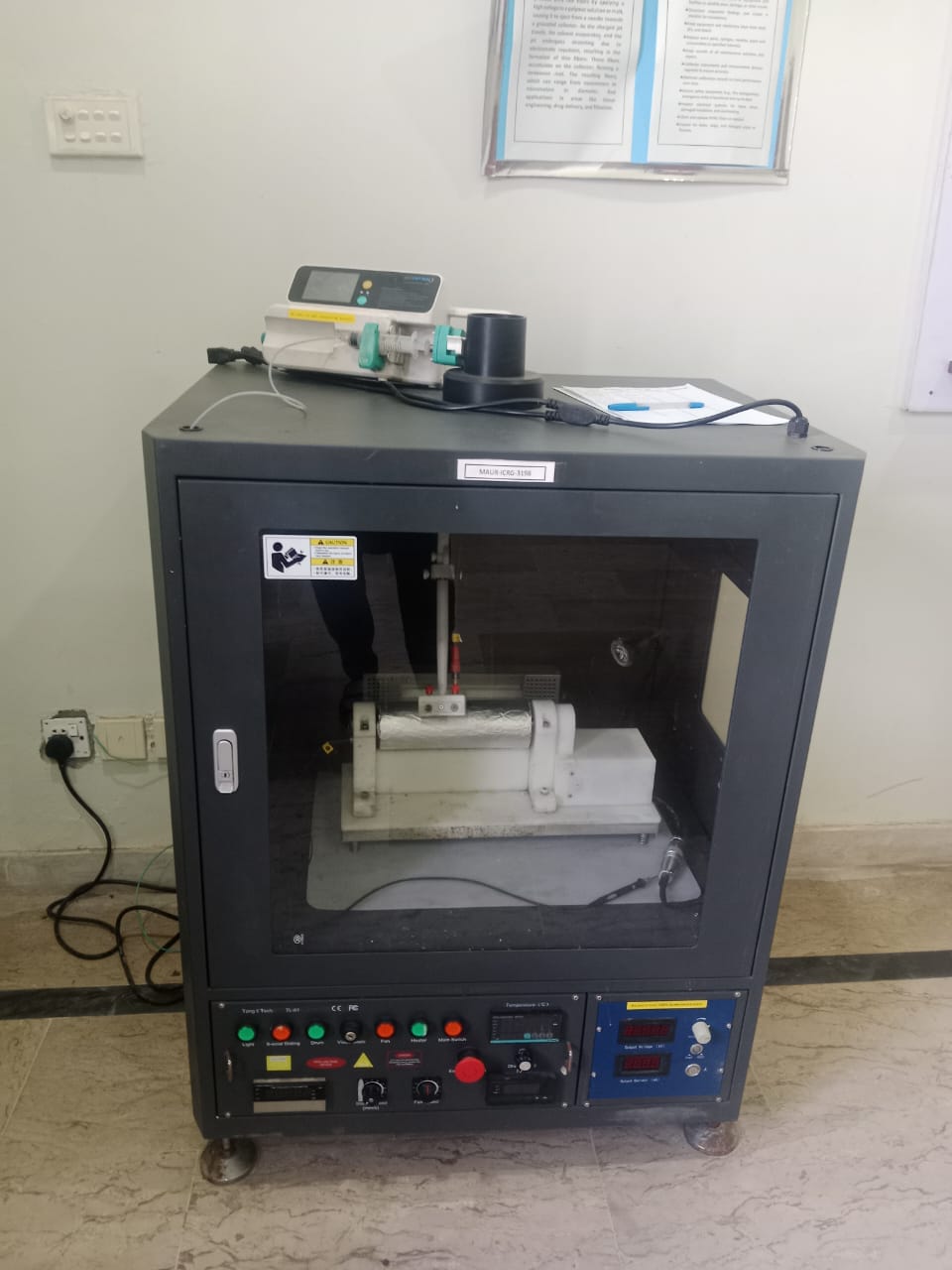
TL-01 electrospinning machine
Under the influence of an electric field, the high-voltage electrospinning machi...
View Details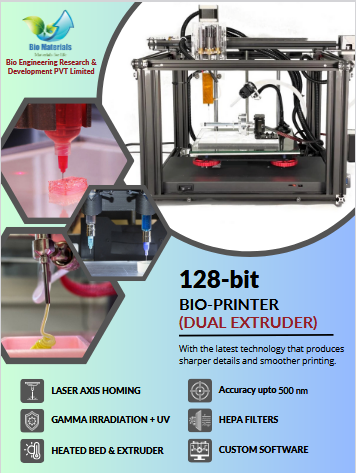
BERD Bio-Printer 128-bit (Dual Extruder)
BERD Bio-Printer are advanced biofabrication and precision printing systems desi...
View Details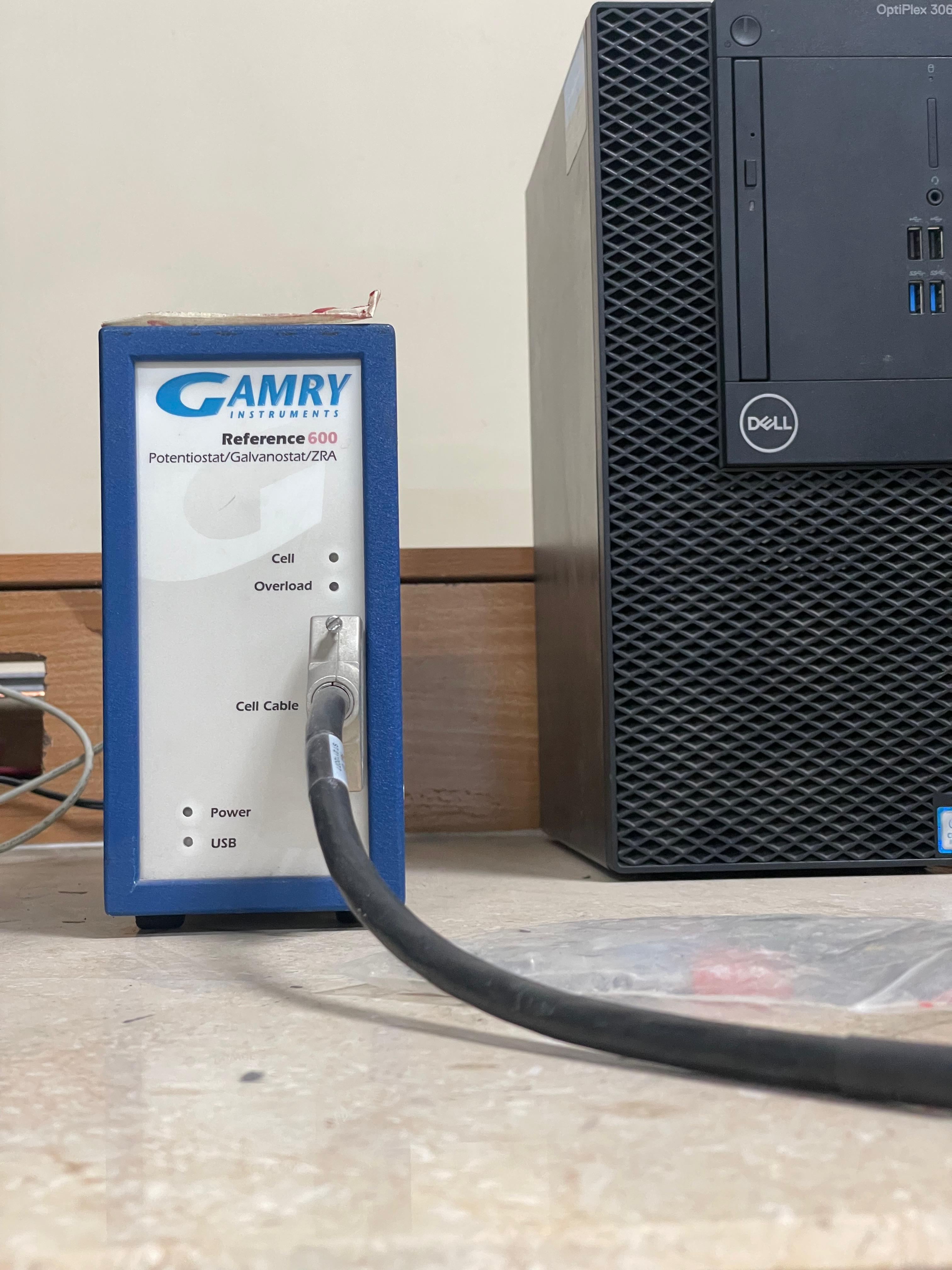
Gamry Reference 600 Electrochemical Impedance Spectroscopy (EIS) System
The Gamry Reference 600 is a research-grade potentiostat/galvanostat/zero-resist...
View Details